Prostate cancer is the most commonly diagnosed cancers among Australian men. It is estimated 1 in 5 men will be diagnosed by age 85.
The good news is that survival rates continue to improve, with men diagnosed with prostate cancer now having a 96% chance of surviving at least five years after diagnosis, thanks in part to advances in research, screening and treatment.
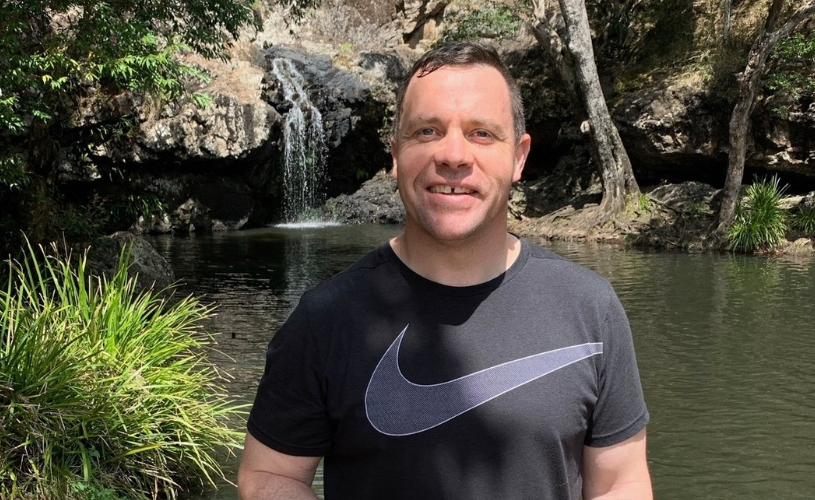
For Steve, those statistics became deeply personal when an unexpected diagnosis turned his world upside down.
Steve had just returned from his honeymoon in Europe with his new wife, Gillian. They were newly married, full of plans for the future, and settling into life in Brisbane when everything changed.
One ordinary day at work, Steve began feeling strange pains in his stomach. He didn’t think much of it, but decided to book an appointment with his GP, a decision that would ultimately save his life.
After discussing his symptoms and family history, his doctor ordered a few tests, including a PSA test, which helps detect prostate issues. The results showed a slightly raised PSA level and traces of blood in his stool, prompting further investigation.
An MRI scan and biopsy soon confirmed the diagnosis: prostate cancer. Steve was just 45.
“I was absolutely devastated,” he says. “We’d only just started our life together, and suddenly I didn’t know what the future would look like.”
Steve was referred to Dr. Watson at the Mater Hospital, who gave him confidence that his cancer could be treated. Thanks to remarkable advancements in diagnostic imaging and robotic surgery, doctors were able to precisely locate and remove the tumour while minimising damage to surrounding nerves.
The surgery was a success. The cancer had not spread, and Steve did not need chemotherapy or radiation. His recovery was steady, and his follow-up tests have shown zero PSA readings ever since.
Today, Steve is deeply grateful, not only for the care he received at Mater, but for the research that made it possible.
"Research is the reason I'm still here," he says. "Because of it, cancers like mine can be detected earlier and treated more effectively. It saves lives, and I'm living proof."
Now cancer-free, Steve is sharing his story to encourage other men to prioritise their health and have conversations with their doctor about prostate cancer screening.
"If something doesn't feel right, don't ignore it. Go to your doctor. Early detection gives you the best chance. It gave me mine."
This Prostate Cancer Awareness Month, Steve is encouraging other men to prioritise their health and have conversations with their GP.
His story is a reminder that progress in research and treatment is changing lives every day, giving patients and their families more reasons to look forward with confidence and hope.
This month, take some time to check in on your health and encourage the men in your life to do the same. It could be a conversation that saves a life.