When Ingrid and Sass walked into their 20-week scan, they were full of hope. But their joy quickly turned to heartbreak when they learned Ingrid’s body couldn’t carry their baby to term.
Urgently transferred to Mater Mothers’ Hospital in Brisbane, the family spent two agonising weeks—preparing to say goodbye to a baby they hadn’t even held.
Yet, Ingrid, Sass—and their unborn baby—held on to more precious, ultimately life-saving time in utero.
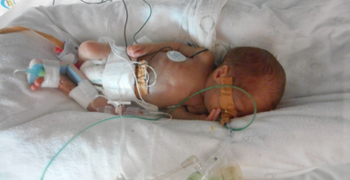
Just four days after the earliest point doctors can attempt resuscitation, baby Waverly was born at just 23 weeks and three days gestation. 17 weeks early and weighing just 505 grams.
Barely the size of a loaf of bread.
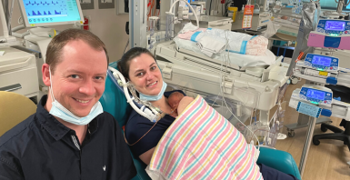
“No-one can ever prepare you for how little that looks,” Sass said. “She was too delicate to touch, let alone hold.”
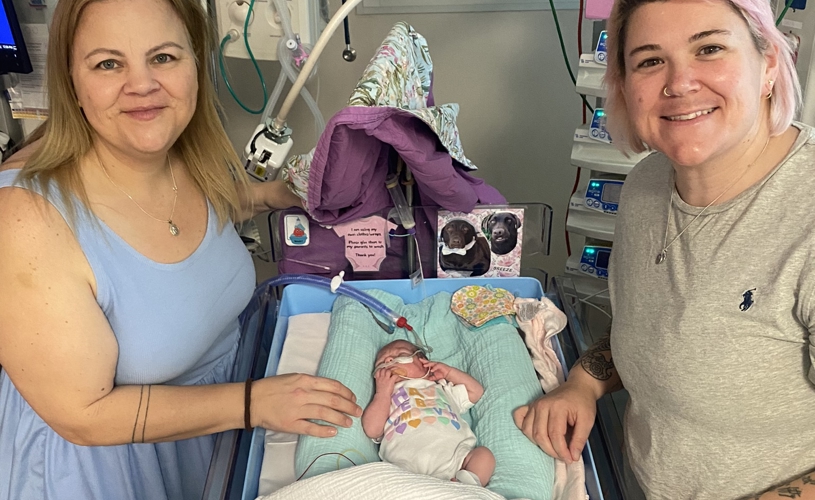
Waverly spent 118 days in Mater’s Neonatal Critical Care Unit, fighting for every breath. Something that most people take for granted.
She battled two life-threatening infections and severely under-developed lungs, but against all odds, survived—thanks to live-saving neonatal research and care.
“There’s no question that without neonatal intensive care, Waverly wouldn't have survived,” said Associate Professor Luke Jardine. “Babies born this early, their organs are still being developed at time of birth.”
“Ongoing research into these tiny babies at Mater is the best chance babies like Waverly have, to not only survive, but to thrive—and go on to live long, happy lives.” Says Assoc Prof Jardine.
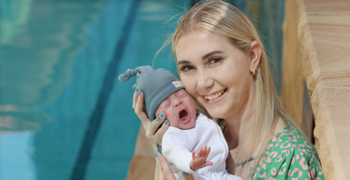
Today, Waverly is living her best life at home, and Ingrid and Sass can’t imagine life without her.